ABSTRACT
This blog addresses the Black Power Movement of Trinidad and Tobago in the 1970s. In depth analysis for the reasons of the movement, its accomplishments and socio-economic impacts will be examined. The blog also shines light on the historical events and movements that have led to the presently imperative substantial topic. The gaps in the research topic focuses on the Black Power Movement and its issues of intersectionality. The research and data were collected through newspaper articles and magazines and an interview with the former Minister of State in the Ministry of National Security, Mr. Embau Moheni who is currently the Deputy Political Leader of the National Joint Action Committee.
THE BLACK POWER MOVEMENT WAS NOT ONLY A GROUP OF PEOPLE WHO FOUGHT FOR EQUAL RIGHTS FOR THE DISENFRANCHISED BUT THE MOVEMENT ALSO TRIGGERED SUBSTANTIAL DEVELOPMENT FOR THE COUNTRIES POLITICAL POLICIES, ECONOMY AND SOCIETY.
INTRODUCTION
HISTORICAL BACKGROUND
The tumultuous years of the 1970s were perhaps the most significant of Trinidad and Tobago’s history and development. This according to the head of the Emancipation Support Committee and one of the founding members of the National Joint Action Committee (NJAC), Khafra Kambon (Trinidad Guardian 21st April 2015). The 1970s Black Power Revolution had its genesis in several events, both locally and internationally. The local movement received inspiration from the Black Power Movement in the United States, as well as the struggle for equal rights in Canada by West Indian students attending the Sir George Williams University in Montreal. This coupled with the country’s colonial history and subsequent transition to independence, and the realisation that political independence had not changed an economic system whereby a person’s skin colour still determined his/her employment opportunities, created a situation ripe for revolution.
In April 1968, Trinidadian and other West Indian students at Montreal’s Sir George Williams University, encountered racism at the University. Violence erupted and the students were arrested and charged with serious crimes. Students at the University of the West Indies (UWI), St. Augustine, led by the leader of the NJAC, Chief Servant, Makandal Daaga (then called Geddes Granger), stood in solidarity with the students in Canada. They protested a visit by Canada’s Governor General, Roland Michener, to Trinidad and Tobago and to the UWI campus. Daaga and other students strongly objected to welcoming a Canadian Governor General to UWI at the same time our students in Canada were being unfairly treated.
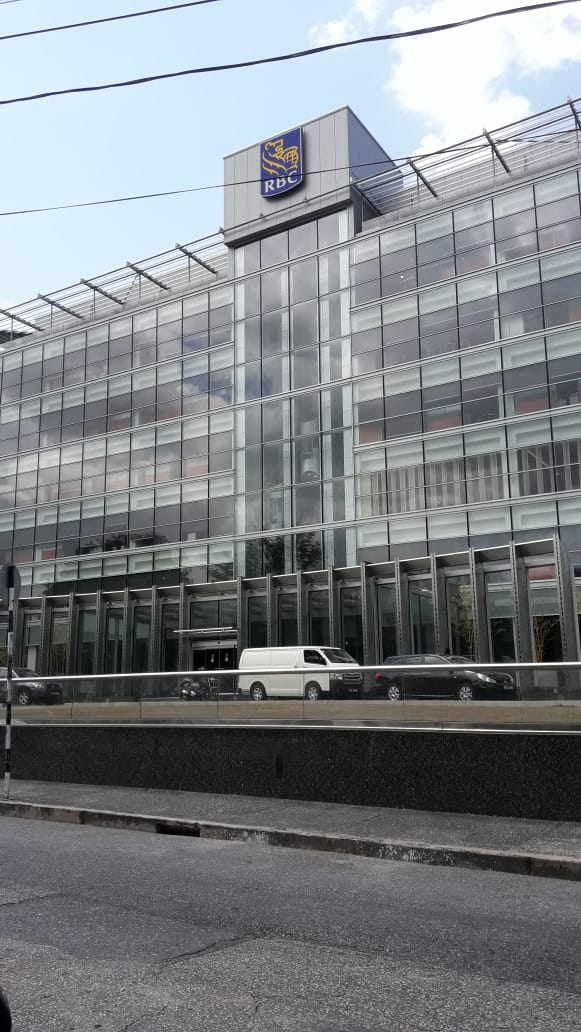
On 26th February 1970, NJAC led a demonstration through the streets of Port of Spain, stopping at the Canadian Embassy, the Royal Bank of Canada’s local office and the Cathedral of the Immaculate Conception. Several leaders were charged for desecrating a place of worship. So started Trinidad and Tobago’s Black Power Revolution, fifty-six days of demonstrations and the biggest popular movement in the history of the country.
Then on 12th March an historic event took place. A mass demonstration which came to be called ‘March to Caroni’ occurred. This demonstration under the leadership of Daaga, united the two major races, Africans and East Indians. In the words of NJAC member and former Member of Parliament, Embau Moheni “The ‘March to Caroni’ was a moment of healing, when the antagonisms and bitterness of that political period were set aside in the interest of human dignity and progress” (Wired 868, 12th March 2016).
On 6th April, in one of the demonstrations a protestor, Basil Davis was shot dead by police. The funeral was the largest demonstration in the history of Trinidad and Tobago. A few days later the country’s largest trade union the Oilfield Workers’ Trade Union (OWTU), declared support for NJAC and joined the struggle. The threat of a nationwide strike triggered by the sugar workers strike on 18th April, loomed. A state of emergency was declared and fifteen Black Power leaders were arrested. For the younger generations of Trinidad and Tobago, the 1970s, one decade after independence, was a disappointment to people with great hopes of what independence meant to them. The economy was still controlled by local and foreign whites. The banks were foreign owned, mainly Canadian and hiring practices at the banks excluded persons of colour.
Prime Minister Dr. Eric Williams, in an attempt to suppress the movement, introduced the Sedition Bill, banned books and literature from certain authors such as Che Guevara and passed the Public Order Act which reduced civil liberties in an effort to control protest marches and to stop the movement. All over the islands, rallies and concerts showcasing artistes such as Brother Valentino, Chalkdust and Black Stalin enhanced the Black Power experience.
The Black Power Movement transformed from a student protest to a popular movement and eventually to an attempted military coup against the state, led by Raffique Shah, a former lieutenant and others, who led three hundred troops in a mutiny at Teteron Barracks. It led to significant changes in employment practices and in ownership of property in the country. The Revolution was a national liberation movement that transformed the development of the islands and crated an atmosphere for new growth.
Geographical Analysis Based on Geopolitical Concepts
Jones et al. (2004,3) states that “politics is the whole set of processes that are involved in achieving, exercising and resisting power from the functions of the state, to elections to gossip. Policy is the intended outcome, the things that power allows one to achieve and that politics is in position to do so”. This concept is evident during the 1970 Black Power Movement when university students along with the National Joint Action Committee (NJAC) and National Union of Freedom Fighters (NUFF) protested in Port-of-Spain. This cultural and social uproar brought a lot of difficulties on the People’s National Movement and Dr. Eric Williams who was Prime Minister at that time as they struggled to control the movement. The government took advantage of their power and eventually retaliated by introducing the Sedation Bill which incorporated serious fines and jail time for the incarcerated. Certain books even became outlawed such as those written by Ernesto Che Guevara. The public order act was also introduced by the Prime Minister in an effort to control protest marches by reducing civil liberty.
According to Jones et al. (2004,105) “a community is a group of individuals who are bound together by a common characteristic or a common interest and who enjoy a high level of mutual social interaction.” He further explained that many communities represent a social group with members from many different places. Jones’ definition of a community was indeed very accurate as it was clearly demonstrated during the ‘March to Caroni’ which played a significant role in the Black Power Movement. During the 1960s, the people had been taken down a very destructive and narrow-minded path of ethnic division which fragmented the society. It is sad to say that national unity and progress was sacrificed for political gain. The African and Indian communities were greatly misled by the major political parties at the time, resulting in hostility among the races. The National Joint Action Committee (NJAC) was very determined to replace the existing antagonisms with bonds of unity between communities and individuals nationwide as they realized that it was a pre-requisite for the development of a progressive and strong nation. Thousands of people from both races joined this movement forming a large community with a common goal and interest which was to re-define independence in terms of the units of all sectors of the society.
Premdas (1999,9) states that “A national identity or self is born in the congruence between the beliefs if a community and those of the state. During the 1970s, the economy was still controlled by local and foreign whites and excluded Africans and Indians from working in many sectors of the economy. As a result, the Black Power Movement attempted to curve this issue such that race and ethnicity were no longer to be determining factors in people’s treatment and access to equal opportunities.
A Geographical Analysis
The black power movement or revolution as it is occasionally called in Trinidad and Tobago peaked in the year 1970. There was a mixture of local and international influences that catapulted the movement. Looking at this socio-economic demonstration from a geographical perspective gives insight into the scale or magnitude of this movement that crossed boarders, oceans and cultures.
Firstly, the origins of social movements have to be looked at. The term “social movements” implies collective effort and, by inference, concerns with human beings and their relations to each other; social movements highlight the organizational facet of protest and resistance and so also may be associated with violence. Jenkins (1981) noted that groups of people tend to coalesce at times of turmoil when protest activity intensifies, new repertoires of collective action are created, and unconventional action spreads to different social sectors. Tarrow (1998) located the birth of social movements generally in the eighteenth century when nation-states, economic development, and new systems of communication made it possible to mobilize against authority in a sustained and collective manner.
In the late 1960’s globalization and communication technologies advanced and news from around the world travelled faster than ever. The development of new communication technologies also has had a dramatic impact on social systems and organizations (Buechler 1993).At this period in time the local movement was influence by the Black power movements in the United States. The ideologies and doctrines of this movement were inspiring and the youths of Trinidad soon became enamoured by the developments in the U.S. Furthermore due to the large and numerous Trinidadian diasporas residing in the United States many locals especially those of African descent felt connected and sympathised with the issues faced by African Americans. Then the news of 10 Trinidadian students attending Sir George Williams University in Canada being wrongfully arrested wept the country and provoked action in the form of protests to take place.
The emergence of transnational social movements and global social politics is thus becoming more pronounced as information technology and increased mobility create new spaces for communication and interaction. Myers (1999)
The black power movement in the United States and the one in Trinidad in 1970 transcended boarders and cultures. Imagine a social movement due to racial prejudice and socio-economic disenfranchisement of a particular race in a country 4,500km away influenced another country to take a good look at itself and take similar action to obtain change. Smith et al. (1997) examined the relationships between an emerging global civil society as manifested in transnational social movements and international political institutions. Smith et al. argued these relationships play a critical role in defining global governance trends, as well as promote institutional and policy changes in the international order. And this social movement in 1970 did bring about policy changes in Trinidad and changed the way locals thought and allowed them to express their disservice about a specific dilemma in a civilized manner.
Interview with Key Stakeholder
This is an interview with Mr. Embau Moheni who is the former Minister of State in the Ministry of National Security and is currently the Deputy Leader of the National joint action Committee (NJAC). Here he discusses the Black Power Movement that occurred in Trinidad and Tobago in 1970 and briefly speaks on his involvement.
CONCLUSION
In conclusion, the BPM has had a significant contribution to our people and our economy today. It brought an awareness to the people of Trinidad & Tobago that they should stand up for themselves and fight for equal rights and opportunities for all citizens of the nation regardless of their race or ethnicity. Furthermore, it opened doors of opportunity for both African and Indian citizens increasing their employment rate in jobs that were previously held by whites only which in turn led to the further development of the economy. Prior to 1970 many of our enterprises and companies were foreign owned or owned by local whites.This movement also forced the government to take control and have more locally owned enterprises so that the benefits of our natural resources would not be lost to foreign enterprises or companies. The myriad of socioeconomic development birthed by The black power movement of 1970 was significant. And this significance is being neglected by the education system where this imperative moment in history is not being taught in schools and future generations will have limited knowledge on this staple in their countries history
References
- Hébert, Paul. “”70: Remembering a Revolution” in Trinidad and Tobago.” AAIHS. Accessed April 11, 2019. https://www.aaihs.org/70-remembering-a-revolution-in-trinidad-and-tobago/.
- Jones et al. 2004, 3.
- Moheni, Embau. “Embau Moheni Remembers the 1970 March to Caroni for Racial Unity.” Wired868. April 06, 2017. Accessed April 11, 2019. https://wired868.com/2016/03/12/embau-moheni-remembers-the-1970-march-to-caroni-for-racial-unity/.
- Moheni, Embau. “Remembering Basil Davis: The 1970 Trinidad and Tobago Revolution’s First Martyr.” Wired868. April 06, 2017. Accessed April 11, 2019. https://wired868.com/2016/04/08/remembering-basil-davis-the-1970-black-power-movements-first-martyr/.
- “When Black Power Took over T&T.” Trinidad Guardian. Accessed April 11, 2019. http://guardian.co.tt/lifestyle/when-black-power-took-over-tt-6.2.363405.86a3ed4d20.
- Connelly, Corey. “Teach black power history.” Trinidad and Tobago Newsday, April 18, 2018.
- Gilkes, Corey. “My reflections on black power conference.” Trinidad and Tobago News (blog). October 02, 2010. Accessed May 28, 2019. http://www.trinidadandtobagonews.com/blog/?p=4323 Hebert, Paul. “Remembering a revolution” Trinidad and Tobago. AAIHS. September 30, 2016. Accessed April 01, 2019. https://www.aaihs.org/70-remembering-a-revolution-in-trinidad-and-tobago/
- Teelucksingh, Jerome. “Black Power movement in Trinidad and Tobago.” Black Diaspora review (2014): 157-180 Pasley, Victoria. “The black power movement in Trinidad: An exploration of gender and cultural changes and development of a feminist conciousness.” Journal of international women studies 3, no. 1(2009): 24-37
- Quinn, Kate. “Black power in the Caribbean.” Florida: University press of Florida, 2014.
- Lux, William. ” Black power in the Caribbean” Journal of Black studies 3, no. 1(1972): 207-225
- Staeheli, Lynn. ” Mapping Women Making Politics.” USA: Routledge, no. 1(2004): 208-218
- Agnew, John. ” A companion to political geography.” USA: Wiley-Blackwell, no. 1(2007): 104-117
This blog is in partial fulfillment of the GEOG2017: Political Geography and Geopolitics course 2018/2019 lectured by Amílcar Sanatan
 Black Power in T&T